Map the load and the light pattern
- For generators, list the running load and the largest motor’s starting surge. The gap between those numbers drives sizing and receptacle mix.
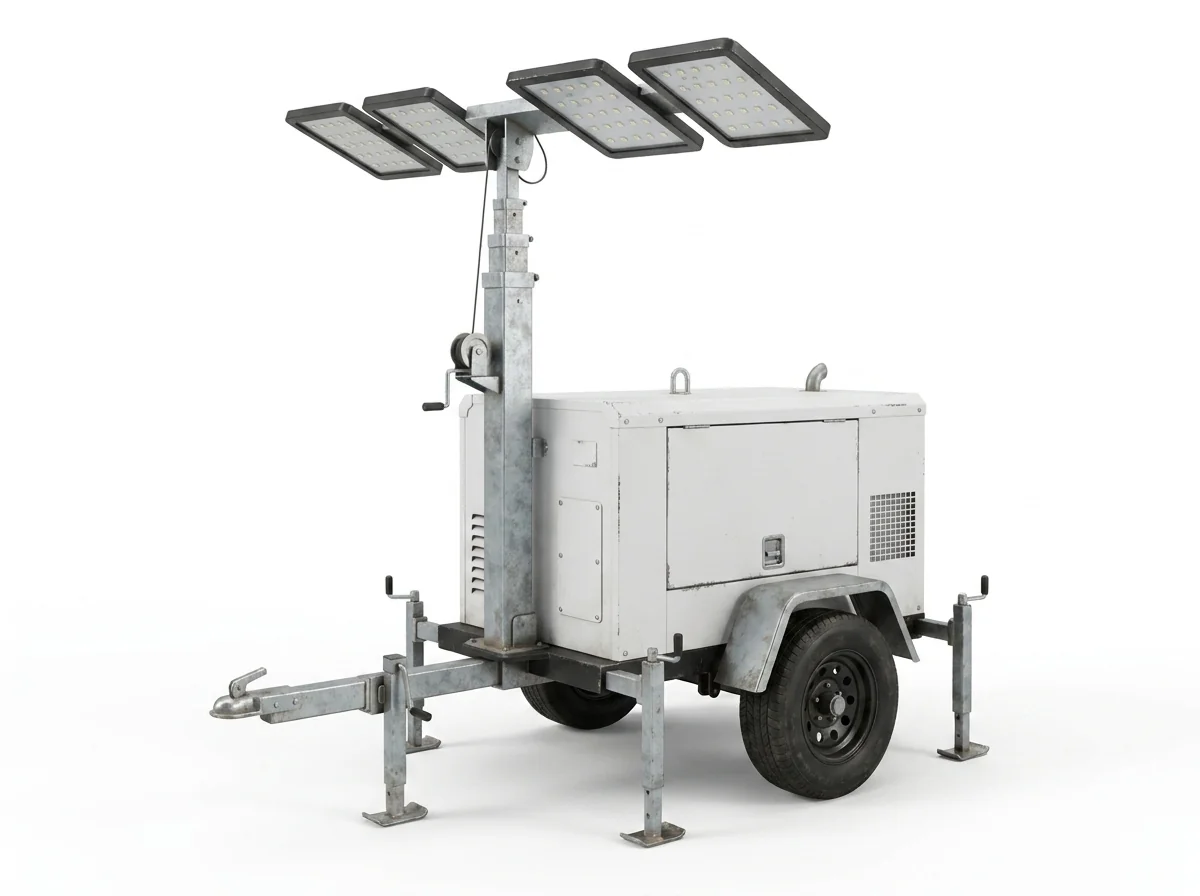
- For light towers, sketch the area geometry: long dock aprons and lanes need elongated coverage, while staging yards call for wider throw and elevated mast height.
Dallas site conditions that change the plan
- Indoor work on polished slabs in local distribution buildings favors compact, low-emission units that can sit below the task and pass through standard doors and corridors.
- Outdoor setups on expansive clay can settle or rut after rain. A wider wheelbase and ground-bearing calculation help maintain level stands for light masts and stabilize trailer-mounted generators.
- Severe spring weather raises the importance of equipment that can be powered down and repositioned quickly to protected storage.
Access route and footprint
- Trace the route from drop point to use point: dock ramps, thresholds, and tight turns can limit trailer-mounted units. Note door clear height and slab load limits for indoor positioning.
- On crowded projects, consider how cable runs cross travel paths. Longer runs add voltage drop; plan distribution near the load rather than a single distant source.
Power quality and runtime
- Sensitive electronics at data and controls installations require steady voltage and frequency. Governor type and any integrated voltage regulation affect this.
- Runtime expectations change with Dallas heat. Higher ambient temperatures can influence derating and fuel consumption. Match tank size and refuel access to shift length and curfew rules.
Light placement and glare control
- Dock work and yard inspections benefit from mast height that can sit just below nearby rooflines or over stacked containers, reducing shadowing.
- In mixed-use areas, aim orientation and lensing to limit spill light onto neighboring lots or roads.
Related access equipment decisions
If work at height is part of the same scope, compare lift categories alongside power and lighting needs: - Indoor maintenance lanes: see /electric-scissor-lift-rental/ and /vertical-mast-lift-rental/. - Outdoor structural or utility work on uneven surfaces: see /rough-terrain-scissor-lift-rental/ and /boom-lift-rental/.
What to have on hand before you call
- Total running/starting load and plug types
- Indoor slab rating and doorway sizes, or outdoor surface description and slope
- Required runtime per shift and refuel access window
- Area dimensions needing illumination and any light-spill restrictions
Actual site conditions, the selected unit’s instructions, and project procedures govern placement and operation, especially for exterior setups and elevated masts.