Start with the work geometry
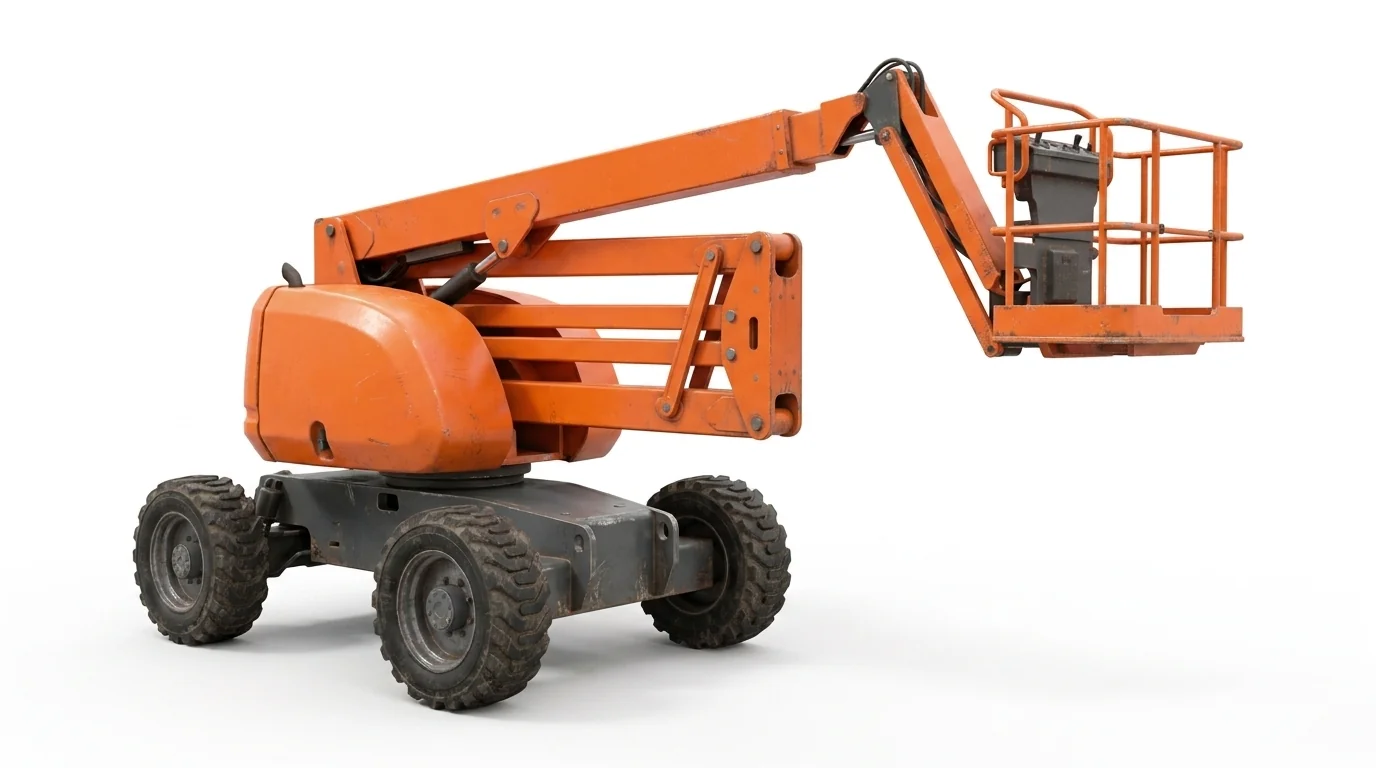
Articulating booms hinge in multiple places to move up, over, and back down. They are chosen when: - The machine must sit below the task and reach over an obstacle like a parapet, conveyor, canopy, or loading dock canopy. - The approach lane is narrow and a basket needs to sidestep columns, racks, or signage. - Positioning accuracy matters near glazing, conduit runs, or architectural features.
In Dallas, interior service on tall logistics spaces can require up-and-over reach to clear rack tops or mezzanines. Exterior work around structured facades and retrofit MEP often favors an articulating jib for lateral maneuvering without re-spotting the chassis.
Local ground and weather factors
Expansive clay soils in North Texas can pump and soften after rain, then crack during dry heat cycles. That matters because chassis stability changes with surface stiffness. - For paved yards, slabs, and finished pads, slab-rated articulating booms with non-marking tires may be appropriate. - For unfinished sites or areas with recent trenching where the subgrade may shift, rough-terrain articulating booms with appropriate tires and oscillation features are typically compared.
Severe spring weather can force quick transitions from exterior to sheltered storage. Plan staging so the unit can be moved under cover if storms and hail are in the forecast.
Measurements that narrow the model range
- Working height and up-and-over clearance: note the highest obstacle and the setback distance from the base to the drop-in point.
- Platform capacity: confirm total load of people, tools, and materials.
- Weight and floor loading: verify slab rating for interior routes and mezzanines.
- Width and turning radius: check aisle, gate, and door clearances from yard to work face.
- Power source: electric or hybrid is common for interior or mixed-use days; diesel is common for exterior construction.
Where articulating booms fit in Dallas
- Interior maintenance and retrofit inside local distribution buildings with tall racks.
- Façade inspections and signage where overhangs and awnings block straight approaches.
- Data and electrical install work where conduits and trays create reach-around demands.
For long, unobstructed reach across open pads or steel erection with clear approaches, compare a straight boom at /telescopic-boom-lift-rental/ or the general category at /boom-lift-rental/.
Related categories
- Interior vertical work with minimal obstacles: /electric-scissor-lift-rental/
- Outdoor slab or graded work platforms: /rough-terrain-scissor-lift-rental/
- Material placement to elevated decks: /telehandler-rental/